⚡ Key Takeaways
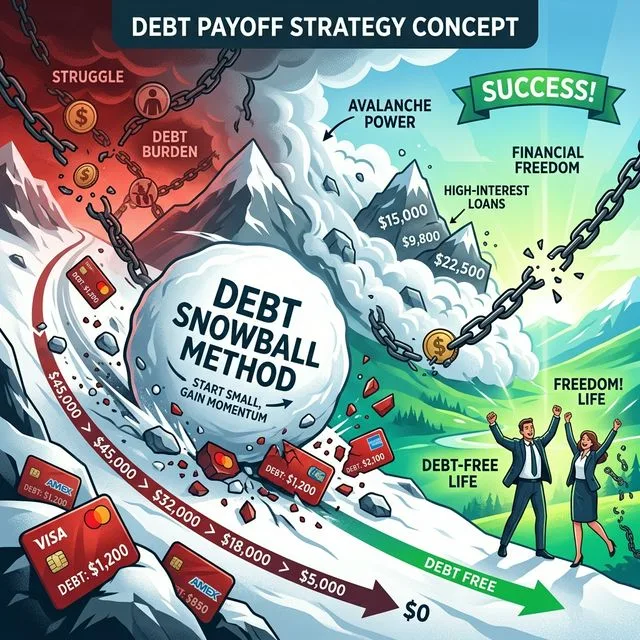
- Avalanche method = pay highest interest rate first → saves the most money mathematically
- Snowball method = pay smallest balance first → delivers psychological wins and motivation
- Both methods beat making minimum payments on all debts
- Research shows snowball users are more likely to finish their debt journey
You've got multiple debts — a credit card at 24%, a car loan at 7%, and a medical bill at 0%. Which do you attack first? Two popular strategies offer very different answers, and the right choice depends on knowing yourself as much as knowing the math.
The Debt Avalanche Method
With the avalanche method, you list all your debts by interest rate from highest to lowest. You pay minimum payments on everything, then throw every extra dollar at the highest-rate debt first.
Once that's paid off, you take the money you were paying on it (minimum + extra) and add it to the next highest-rate debt. This is the "avalanche" — an accelerating payoff that grows more powerful as each debt falls.
Why it works mathematically: High-interest debt costs you the most money over time. Eliminating it first minimizes total interest paid.
The Debt Snowball Method
Made famous by Dave Ramsey, the snowball method reverses the order: you list debts by balance from smallest to largest and attack the smallest first, regardless of interest rate.
Each paid-off debt gives you momentum and a psychological win that keeps you motivated. The "snowball" rolls and gets bigger with each conquest.
Why it works psychologically: Behavior change is hard. Quick wins keep people engaged. Research published in the Journal of Marketing Research shows snowball users are more likely to complete their debt journey.
Real Example: The Math
Let's say you have these debts and $500/month to put toward them:
| Debt | Balance | Interest Rate | Min Payment |
|---|---|---|---|
| Credit Card A | $4,200 | 24.99% | $84 |
| Medical Bill | $800 | 0% | $35 |
| Car Loan | $11,000 | 7.5% | $220 |
| Student Loan | $18,500 | 5.8% | $190 |
Avalanche result: Pay off in ~52 months, total interest paid: ~$5,200
Snowball result: Pay off in ~55 months, total interest paid: ~$5,800
The avalanche saves you ~$600 and 3 months. But with snowball, you knock out the medical bill fast and feel the momentum.
Which Method Should You Choose?
- Choose Avalanche if: You're highly analytical, the difference in interest savings is significant ($1,000+), and you won't lose motivation without early wins.
- Choose Snowball if: You've tried paying off debt before and quit. You need to feel progress quickly. Your small debts will be gone within 1-3 months.
- Hybrid approach: Pay off the 1-2 smallest debts immediately for a quick win, then switch to avalanche for the rest.
"The best debt payoff method is the one you'll actually stick with. A slightly suboptimal strategy executed consistently beats the perfect strategy abandoned."
Use our free Debt Payoff Calculator to run your own numbers and see exactly when you'll be debt-free.
CFA and personal finance expert specializing in debt strategy and wealth building.